Domain Name Negotiation: 9 Tactics That Actually Lower the Price in 2026
Domain name negotiation tactics that actually lower the asking price in 2026. Anchoring, walk-away math, escrow, and the moves sellers don't expect.
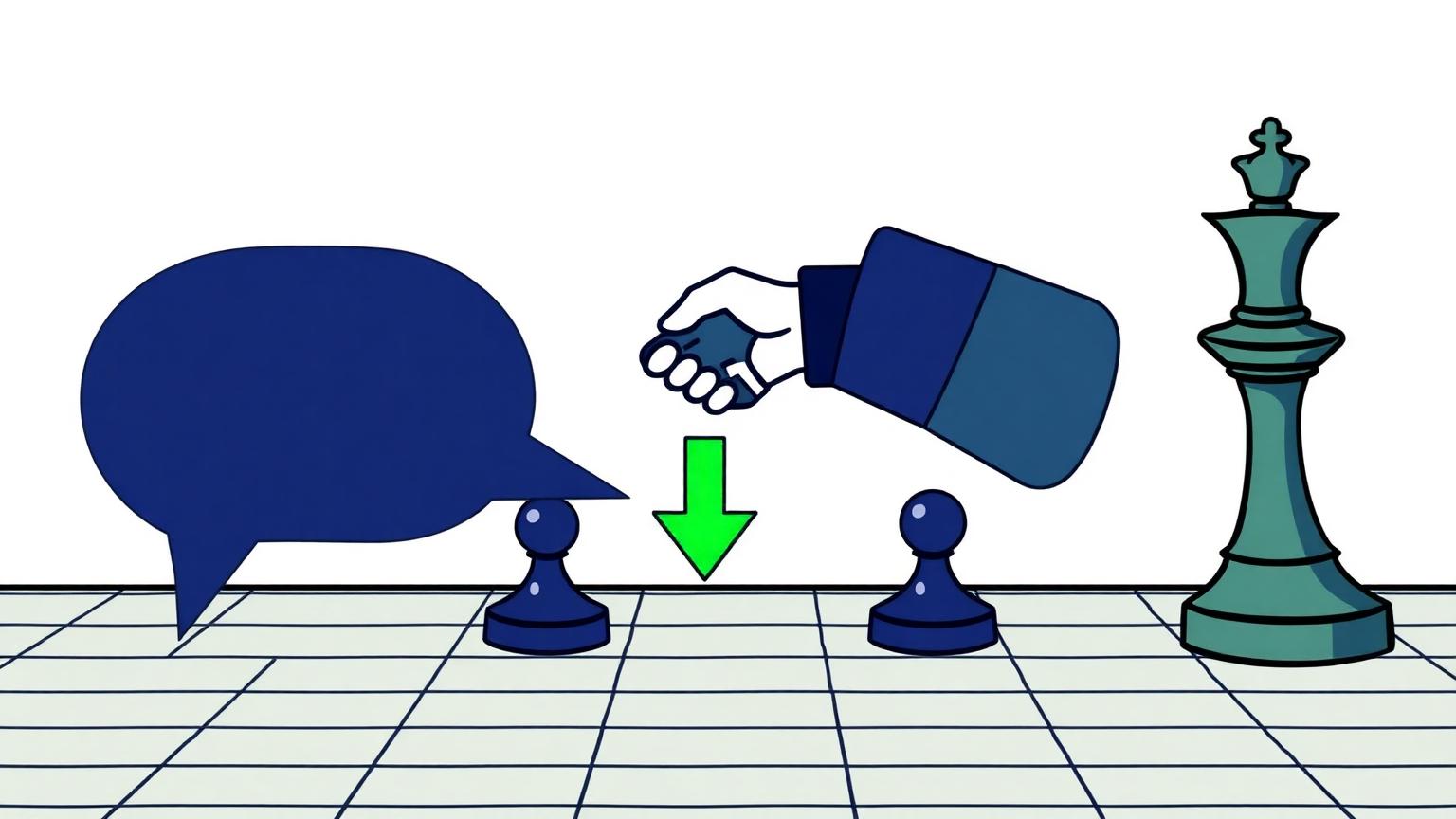
Domain name negotiation in 2026 rewards preparation over pressure. Sellers list aspirational asks; agent-assisted comps mean both sides arrive with similar data; and the buyers who close at 30–50% of asking do it by following a repeatable process, not by being aggressive.
These nine tactics are the moves that consistently lower the final price on a real domain acquisition — without burning the relationship or losing the name.
The short answer on negotiating a domain purchase
Walk in with a written walk-away price, a defensible appraisal, and at least two backup names. Open at 30–40% of your walk-away. Move slowly. Never reveal your end-user case. Close through escrow. That sequence produces the cheapest closes — every other tactic below is a refinement.
1. Build your number before you make contact
Use the framework in how to value a domain name in 2026 to set three numbers: opening offer, target close, and walk-away. Write them down. Without them, you'll negotiate against the seller's anchor instead of your own.
2. Anchor low — and justify it with comps
Your opening offer should be 30–40% of your walk-away price, paired with two or three specific recent comps. An anchored offer with evidence is taken seriously. A round-number lowball with no rationale gets ignored.
3. Use a non-personal email and a neutral identity
If the seller can Google you and find a funded startup, your price doubles. Negotiate from a clean email address with no identifiable company affiliation until the deal is closed. This is the single highest-leverage tactic for end-user buyers.
4. Never reveal what you'd do with the name
Sellers price on perceived end-user value. The moment you mention your product, market, or funding, the anchor moves. Keep messages short, generic, and focused on the name itself: "I'm interested in this name for a personal project. What's the best price you can do?"
5. Slow the cadence on purpose
Reply in 24–48 hours, not 24 minutes. Speed signals urgency, and urgency raises prices. A negotiation that takes two weeks routinely closes 20–40% lower than the same negotiation rushed to close in two days.
6. Use a credible walk-away
Identify two or three backup names before you open the conversation, and reference them naturally when the seller holds the line: "Understood — I have a couple of other names I'm considering at that range, so I'll have to pass." A walk-away you can actually execute is the only move that resets the seller's expectations.
7. Counter with structure, not just a number
Instead of bumping your offer, restructure the deal: shorter payment plan, faster close, escrow paid by buyer, or a small premium for an instant transfer. Structure concessions feel valuable to sellers and often cost the buyer less than a straight price increase. We covered the mechanics of structured deals in lease-to-own domains explained.
8. Always close through escrow
Non-negotiable. Use Escrow.com, Sedo, Dan, or a registrar's built-in escrow. Pay the fee even on small deals — it protects the wire and confirms the seller actually controls the name. Buyers who skip escrow to save $50 occasionally lose five-figure wires to fraud. Don't.
9. Use silence after the final number
When you put your walk-away on the table, stop typing. Sellers fill silence with concessions more often than buyers do. A 48-hour pause after a final offer closes more deals than another round of justification.
What not to do
- Don't insult the name. Telling a seller their domain is mediocre rarely lowers the price; it hardens the position.
- Don't bid against yourself. If the seller doesn't counter, wait. Don't volunteer a higher number.
- Don't reveal urgency. A funding round, a product launch, a brand reveal — keep all of it out of the thread.
- Don't skip the trademark check. A name that infringes is worth zero. Run a search before opening.
How AI is changing domain negotiation in 2026
Both sides now have agent-assisted comps, which compresses the middle of the market — four- and low-five-figure deals trade in tighter bands than in 2023. Pro buyers use agents to draft openers, model walk-away math, and surface mid-thread comps, but keep humans in the loop for the final number. For the full picture, see AI agents in domain investing.
The bottom line
Domain name negotiation isn't a personality trait — it's a process. Set your numbers in writing, stay anonymous, move slowly, use credible walk-aways, and close through escrow. Buyers who follow that sequence consistently close at 30–60% of asking. Buyers who don't pay full ask and assume that's normal.
Want a transparent process instead of a negotiation? Tell us what you're looking for or contact the team and we'll quote a defensible number from the start.
Frequently asked questions
How much below asking price should I offer on a domain?
Open at 30–40% of your walk-away price (not 30–40% of the asking price). Asking prices are aspirational anchors, so building your offer from your own appraisal — not from the seller's number — is what separates a disciplined buyer from one who overpays.
Should I tell the seller what I want the domain for?
No. Sellers price on perceived end-user value. The moment you reveal a funded startup, a specific product, or a launch date, the price moves up. Keep all inquiries generic until after the deal is closed and the name has transferred.
Is it safe to negotiate a domain purchase without a broker?
Yes, as long as you close through a regulated escrow service (Escrow.com, Sedo, Dan, or registrar-built escrow). Brokers add value on five-figure-plus deals and complex structures, but most four-figure transactions are safely handled buyer-to-seller with escrow in the middle.
How long does a domain negotiation usually take?
Two to four weeks is typical for a deal that closes well below asking. Negotiations rushed to close in 48 hours often pay close to ask — speed signals urgency, and urgency raises prices. Build a slow cadence into your process intentionally.
What's the best way to make a serious lowball offer without insulting the seller?
Pair the number with two or three specific recent comparable sales and a short, neutral message. "Based on these recent comps for similar names, I can do $X. Happy to close via escrow this week if that works." Evidence-backed lowballs are taken seriously; round-number lowballs without justification get ignored or hostile responses.
Related on Browse.it.com
Keep reading on closely related topics, or jump straight to the matching category.
Ready to claim a premium .it.com?
Tell us which name caught your eye — or describe what you're looking for. We respond to every inquiry personally.
Related posts
How to Value a Domain Name in 2026 (Without Getting Ripped Off)
Learn how to value a domain name in 2026: comparable sales, brandability, TLD weighting, and the appraisal mistakes that quietly cost buyers thousands.
ICANN's 2026 New gTLD Round: What It Means for Premium Domain Buyers
ICANN's 2026 new gTLD round is opening hundreds of new domain extensions. Here's what changes for premium domain buyers — and what stays the same.
AI Agents in Domain Investing: What Changed in 2026
AI agents in domain investing now appraise, hunt, and negotiate in seconds. Here's what changed in 2026 — and how serious investors are adapting.